Thunderstorms might feel cozy to humans sitting with coffee and blankets, but for pets, things can feel completely different. Loud thunder, flashing lightning, heavy rain, and weird vibrations often turn calm dogs and cats into nervous little drama queens hiding behind furniture.
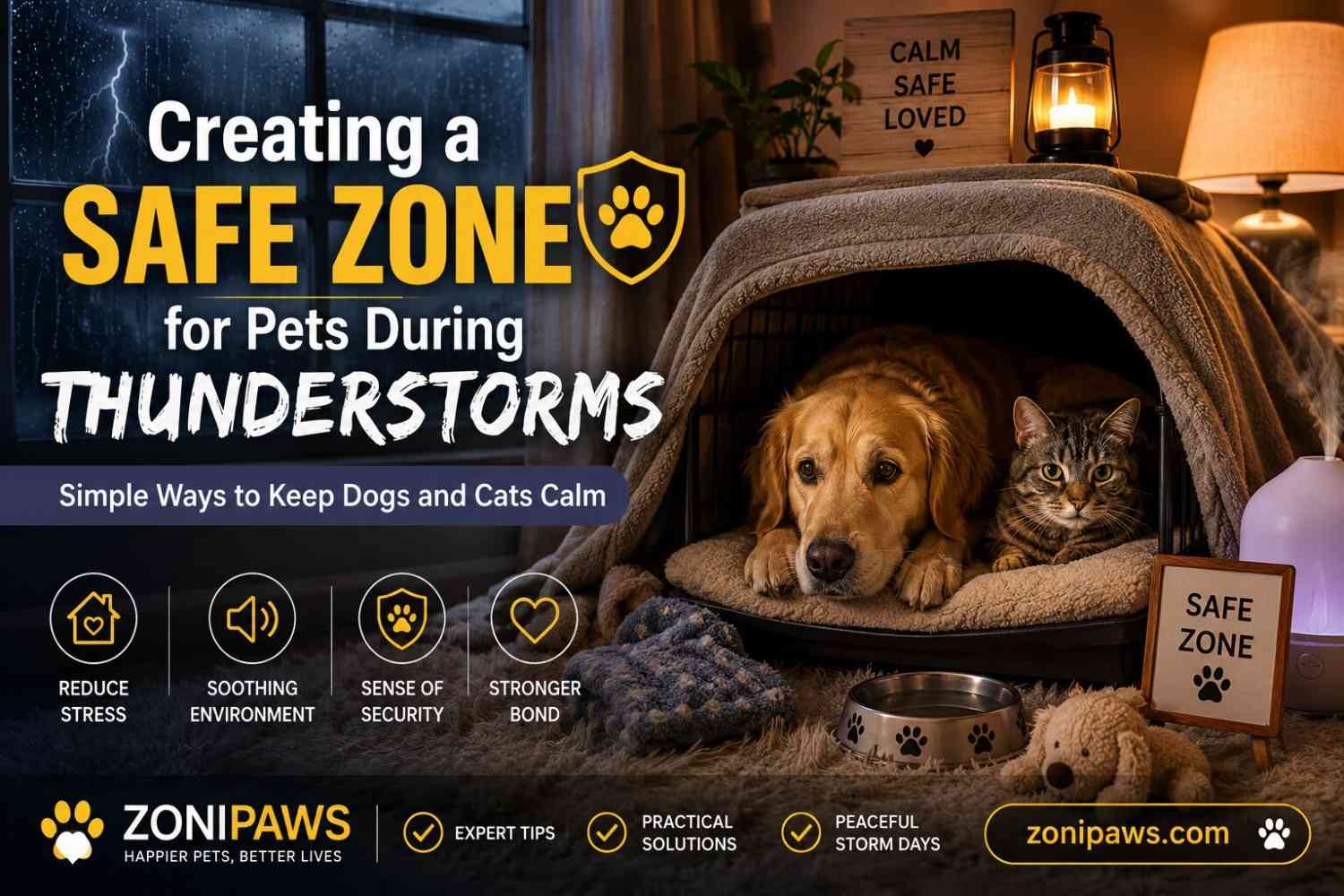
Pet anxiety during storms is extremely common. A normally brave dog suddenly acts like the sky personally declared war on him. Cats disappear so efficiently during storms that people start wondering if they secretly own teleportation powers.
Searches for pet thunderstorm anxiety rise every rainy season because pet owners genuinely struggle to calm frightened animals. Good news is that creating a proper safe zone can make a huge difference.
Simple changes inside your home can help pets feel:
A safe zone is not just a random corner with a blanket. Proper setup matters because scared pets need comfort, routine, and a sense of safety when storms begin.
Animals experience storms differently than humans.
Pets can:
Thunder may sound ten times louder to them.
Dogs especially become anxious because they do not understand where the sound is coming from. Imagine hearing giant explosions outside your window without knowing whether it is weather or the beginning of an alien invasion movie.
Fear response usually includes:
Cats may:
Every pet reacts differently.
A safe zone is a calm, comfortable area where pets feel protected during stressful situations like thunderstorms.
Good safe zones usually include:
Purpose of the safe zone is to reduce fear and overstimulation.
Think of it as a tiny emotional emergency bunker for your pet — minus the dramatic action movie soundtrack.
Location matters more than people realize.
Ideal areas include:
Avoid:
Interior rooms usually feel safer because thunder sounds less intense there.
Here’s a helpful table showing useful items for calming pets during storms.
| Item | Why It Helps |
|---|---|
| Soft pet bed | Comfort and security |
| Blankets | Familiar scent and warmth |
| White noise machine | Masks thunder sounds |
| Favorite toy | Emotional comfort |
| Treats | Positive distraction |
| Covered crate | Creates den-like safety |
| Dim lighting | Reduces stress |
| Water bowl | Keeps pet hydrated |
Comfort items carrying familiar smells often work best because scent plays a huge role in emotional security.
Many pet owners create calming environments using soft beds, cozy blankets, and anxiety-focused accessories specially designed for nervous pets. Thoughtfully selected pet anxiety and comfort essentials can help transform a stressful storm night into a more peaceful experience naturally.
Preparation works better than panic.
Pets should become familiar with the safe zone before thunderstorms arrive. Waiting until thunder starts usually creates more stress.
Let your pet:
Routine creates emotional trust.
Animals find comfort in familiar scents.
Add:
Smell creates emotional reassurance.
Humans buy expensive scented candles for relaxation. Pets simply want your hoodie that smells like snacks and unconditional love.
Thunder sounds are one of the biggest triggers.
Helpful options include:
Low background sound helps mask thunder intensity.
Pets feel safer in smaller enclosed environments.
Add:
Covered spaces create a den-like feeling that naturally comforts animals.
Cats especially love tiny hidden spaces where they can silently judge weather conditions.
Bright lightning flashes can increase anxiety.
Use:
Soft lighting creates calmer surroundings.
Many pets show stress before storms fully arrive.
Watch for:
Early response helps prevent panic escalation.
Yes — calmly.
Old myths claimed comforting anxious pets “rewards fear.” That idea is outdated and misleading.
Pets need reassurance during stressful moments.
Helpful actions include:
Animals read human emotions extremely well.
Panic spreads fast. If humans start acting like the house is collapsing, pets assume things are definitely bad.
Never drag pets out of their hiding spot.
Hidden spaces often help them feel secure.
Scared pets are not being “bad.”
Fear-based behavior should never be punished.
Some pets panic more when isolated during storms.
Waiting until full panic begins makes calming harder.
Very loud music or chaotic noise may increase stress instead of helping.
Distraction works surprisingly well for many pets.
Try:
Mental focus helps reduce anxiety.
Some dogs become extremely food-motivated during storms. Others act like thunder personally ruined their entire emotional future and reject everything except dramatic staring.
Crates can work wonderfully if pets already view them positively.
Never force crate use suddenly during storms.
Ideal crate setup includes:
Crates create a protected den environment for many animals.
Many owners prefer non-medication solutions first.
Natural calming methods include:
Consistency matters more than perfection.
Dogs often:
Cats usually:
Understanding your pet’s personality helps create better solutions.
Young pets are especially sensitive because they lack experience.
Helpful strategies:
Early training shapes long-term emotional confidence.
Modern pet gadgets can support calming routines.
Helpful tools include:
Technology cannot replace emotional comfort, but it can support it.
Some animals experience extreme storm fear.
Signs include:
Professional veterinary advice may help in severe cases.
Long-term anxiety sometimes requires:
Routine creates emotional predictability.
A calming storm routine might include:
Pets feel safer when humans act relaxed and prepared.
Animals notice:
Calm owners help create calm pets.
Funny thing is, some humans panic harder than the dog once thunder starts. Suddenly everybody in the house needs emotional support snacks.
A good safe zone can:
Comfort matters deeply for pets.
Storms may never become “fun,” but they can become manageable.
Dogs hear sounds more intensely and often react to pressure changes, vibrations, and flashing lights.
Yes. Cats often hide during storms and benefit greatly from quiet protected spaces.
No. Calm reassurance usually helps pets feel safer.
Interior rooms with fewer windows and lower noise levels work best.
Yes. Soft music or white noise often helps reduce thunder intensity.
Many pets respond positively to gentle pressure wraps because they create a comforting effect.
Yes. Untreated fear can sometimes worsen over time.
Before storm season starts is ideal so pets become familiar with the area naturally.
Thunderstorms can feel terrifying for pets, but a thoughtfully designed safe zone changes everything.
Comfort, familiarity, and emotional reassurance help animals feel protected when loud storms roll through. A cozy blanket, calming sounds, soft lighting, and a quiet corner may seem simple, yet those small details create powerful emotional security.
Pets do not need perfection.
They need:
Storms eventually pass, but the trust built during stressful moments stays with pets for a long time.
Also, let’s be honest — every pet deserves a cozy emotional support fort during thunder season.





Leave a comment