Watching a pet grow old feels a little emotional. One day they are zooming across the living room like furry rockets, and suddenly they need a few extra seconds just to stand up after a nap. Senior pets deserve comfort during this stage of life, and one simple change can make a surprisingly big difference: orthopaedic foam.
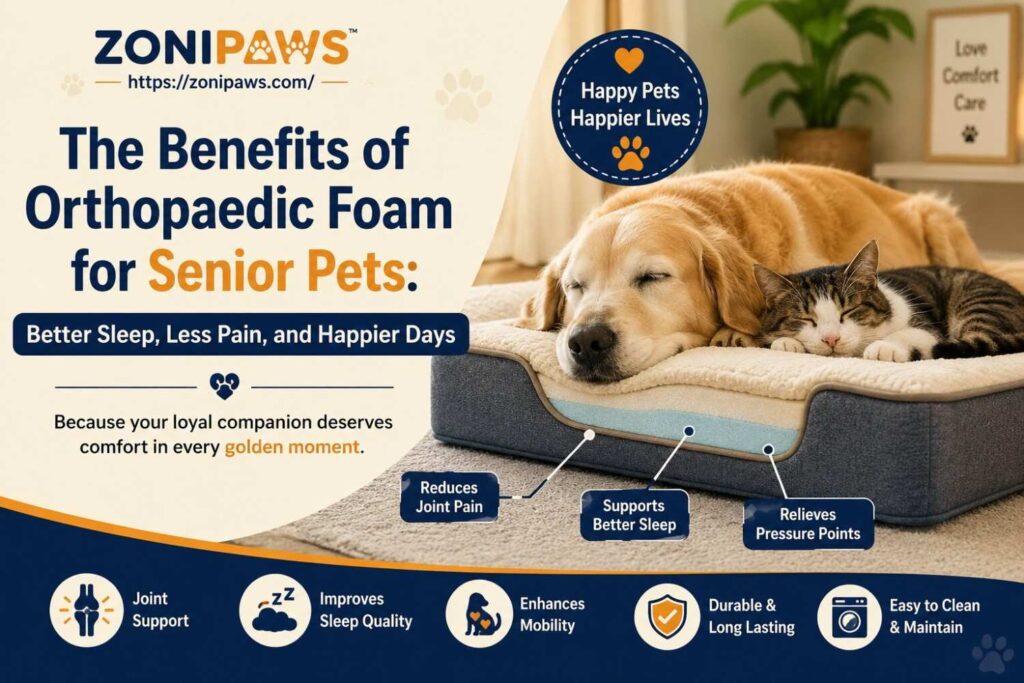
Many pet owners search for the best orthopedic pet bed when their aging dog or cat starts showing signs of stiffness, sore joints, or restless sleep. That search usually begins after hearing strange groaning sounds during bedtime or watching their pet circle the bed twenty-seven times before finally lying down like a tired potato.
Aging affects pets just like humans. Bones get weaker, joints become stiff, and sleeping on hard surfaces starts feeling uncomfortable. Orthopaedic foam helps reduce pressure on sensitive areas and gives older pets the support their bodies need.
Older pets face physical changes that affect their daily comfort. Something as simple as lying down can become difficult over time.
| Problem | How It Affects Pets |
|---|---|
| Arthritis | Causes joint pain and stiffness |
| Hip Dysplasia | Makes movement uncomfortable |
| Muscle Weakness | Reduces mobility and balance |
| Reduced Energy | Leads to more sleeping hours |
| Pressure Points | Creates discomfort on hard floors |
A young puppy can sleep on almost anything. A senior dog? Not so much. Hard flooring may increase pressure on aching joints, especially around the hips, shoulders, and elbows.
Cats hide pain better than dogs, but older cats also struggle with joint stiffness. Many owners think their cat has become lazy, when the truth is the cat simply feels uncomfortable jumping or moving around.
Orthopaedic foam provides cushioning and support that traditional stuffing cannot match.
Orthopaedic foam is a dense and supportive material designed to evenly distribute body weight. Unlike regular fluffy filling that flattens over time, orthopaedic foam keeps its shape and supports the body properly.
Memory foam is one of the most popular types used in premium pet beds because it adapts to the pet’s body shape.
Some pet owners compare it to upgrading from an old sofa to a luxury mattress. Pets may not verbally say “thank you,” but the happy tail wag usually says enough.
Joint pain is extremely common in older pets. Arthritis alone affects millions of aging dogs and cats worldwide.
Orthopaedic foam gently cushions painful joints instead of forcing them against hard surfaces. Pressure relief becomes especially important during long sleeping hours.
Pets that wake up stiff and slow often experience noticeable improvement after sleeping on supportive foam regularly.
Senior pets sleep more than younger ones. Comfortable sleep becomes essential for their physical recovery and emotional well-being.
Poor bedding can cause pets to constantly adjust their position throughout the night. Orthopaedic foam helps keep the spine aligned while supporting the body evenly.
Better sleep usually leads to:
Nobody enjoys waking up cranky after sleeping badly, including pets.
Older dogs often struggle while getting up from the floor. Hard surfaces force joints to absorb extra strain during movement.
Supportive foam reduces that strain and gives pets a more stable resting surface. Many owners notice their pets standing up more easily after switching beds.
Cats also benefit because softer support makes climbing, stretching, and resting less painful.
Some signs appear gradually, which makes them easy to miss.
Senior pets rarely complain loudly. They simply adapt quietly, which is honestly both adorable and heartbreaking.
| Feature | Regular Pet Bed | Orthopaedic Foam Bed |
|---|---|---|
| Support | Basic cushioning | Advanced body support |
| Durability | Flattens quickly | Maintains shape longer |
| Joint Relief | Minimal | Excellent |
| Pressure Reduction | Limited | High |
| Comfort for Seniors | Average | Outstanding |
Traditional beds may look soft at first, but many lose support quickly. Orthopaedic foam remains firm enough to support the body while still feeling comfortable.
Not every foam bed is equally effective. Some are overly thin, while others use cheap materials that flatten after a few weeks.
Thicker foam usually provides better support for larger or heavier pets.
Senior pets sometimes have accidents. Removable washable covers make life easier for everyone.
Beds that slide around can frustrate older pets with mobility issues.
Pets should be able to stretch comfortably without hanging halfway off the bed like dramatic movie stars.
Memory foam is often preferred for aging pets because it provides deeper pressure relief.
Comfort affects emotional health too. Senior pets often experience anxiety as they age, especially when discomfort interrupts sleep.
A supportive resting area creates a sense of security and relaxation. Soft pressure around the body may help nervous pets settle more easily during rest time.
Pet owners exploring ways to create a calmer sleeping environment often enjoy learning more about comfort solutions for anxious pets, especially for older companions dealing with both stress and physical discomfort.
Natural comfort matters more than many people realize.
Large breeds usually experience joint problems earlier than smaller dogs.
Heavy body weight increases pressure on hips and joints. Orthopaedic foam helps distribute that weight more evenly.
Large senior dogs often spend more time lying down because movement becomes tiring. Proper support becomes essential instead of optional.
Cats may act mysterious, but aging still affects them physically.
Older cats commonly develop:
Many cats stop jumping onto furniture because landing becomes uncomfortable. Orthopaedic foam beds give them a softer place to rest without needing high jumps.
A cozy bed near sunlight usually becomes their favorite retirement spot. Honestly, that lifestyle sounds pretty amazing.
Veterinarians often recommend supportive bedding after surgery or injury recovery.
Soft supportive foam helps reduce stress on healing joints and muscles. Recovery periods become more comfortable when pets can rest properly.
Post-surgery pets may spend many hours lying down, so pressure relief becomes extremely important during healing.
Quality orthopaedic foam typically lasts much longer than standard pet bed filling.
| Bed Type | Average Lifespan |
|---|---|
| Cheap Polyester Filling | 6–12 months |
| Standard Foam | 1–2 years |
| High-Density Orthopaedic Foam | 3–5 years |
Durability depends on:
A flattened bed stops providing proper support, so replacing old bedding matters more than many owners realize.
Orthopaedic foam works even better when combined with a comfortable environment.
Warmth and support together create the perfect setup for aging pets.
Fancy-looking beds sometimes prioritize appearance instead of comfort.
Senior pets need room to stretch naturally.
Small changes in movement often indicate discomfort.
Many owners only switch to orthopaedic foam after severe mobility problems appear.
Early comfort support can help maintain better quality of life for longer periods.
Pets become family members. Seeing them struggle with aging feels difficult for most owners.
Providing better comfort is one small way to make their later years happier and easier.
A cozy bed cannot stop aging, unfortunately. Nobody has invented magical immortal pet technology yet. Still, supportive foam can help reduce discomfort and improve daily life significantly.
Small comfort upgrades often create noticeable emotional changes in pets.
Yes. Older cats often develop joint stiffness and arthritis. Supportive foam helps reduce pressure on painful areas.
Larger pets usually benefit from thicker foam, typically around 4–7 inches depending on body weight.
Absolutely. Orthopaedic foam is safe for younger pets, although senior pets benefit the most.
Memory foam generally provides better pressure relief and body contouring for aging pets.
Most beds come with removable washable covers. Foam inserts usually require spot cleaning only.
Replace the bed if the foam becomes flat, uneven, or no longer supports your pet properly.
Senior pets deserve comfort, support, and peaceful rest during their golden years. Orthopaedic foam helps reduce joint pain, improves sleep quality, supports mobility, and creates a more relaxing environment for aging dogs and cats.
Small changes in bedding can create a surprisingly big improvement in daily life. Something as simple as supportive foam may help an older pet move more comfortably, sleep more deeply, and feel more relaxed overall.
Growing older may slow pets down, but comfort can still keep their tails wagging and their purrs going strong.




Leave a comment